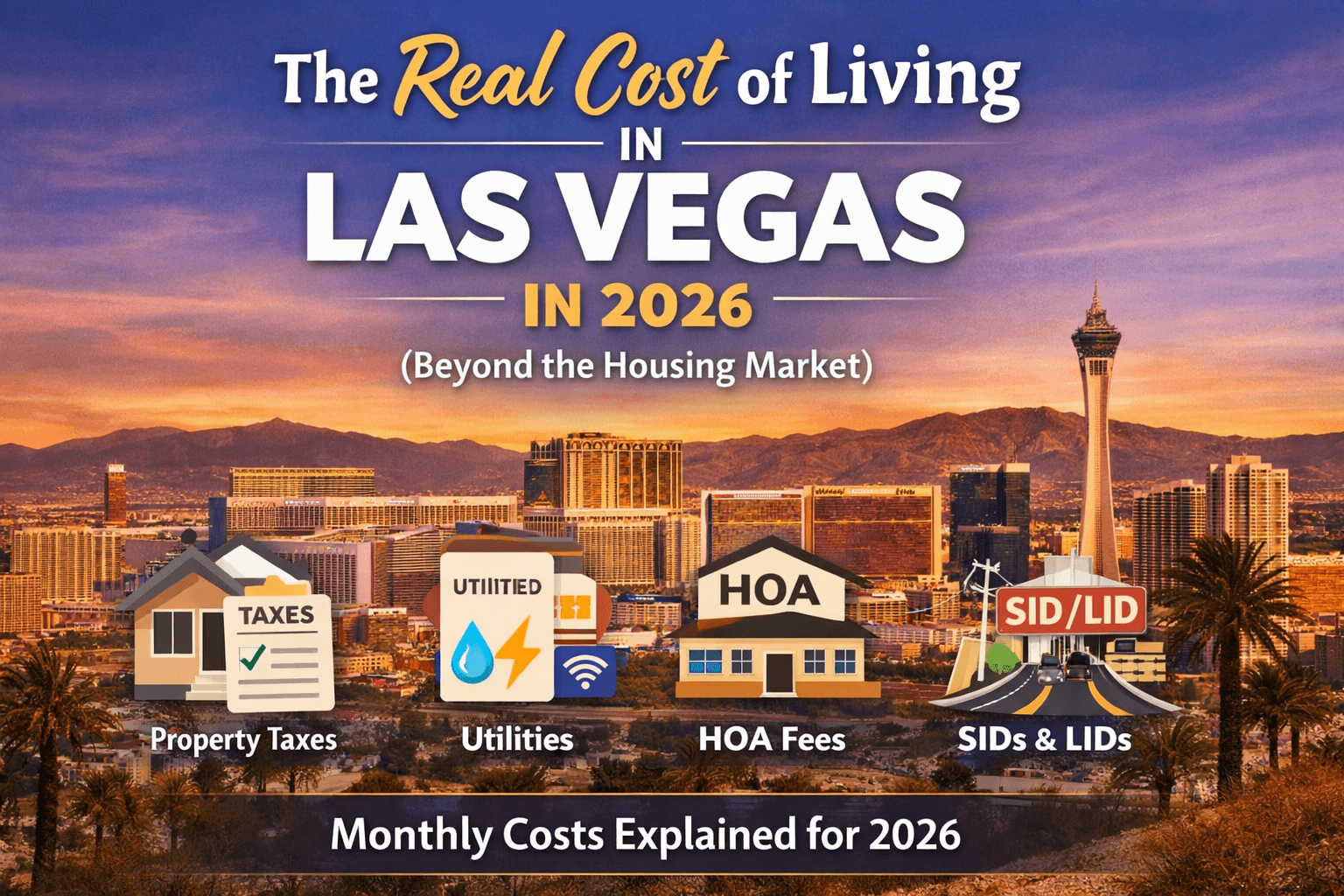

If you are moving to Southern Nevada, understanding the cost of living in Las Vegas 2026 is essential for a smooth transition.
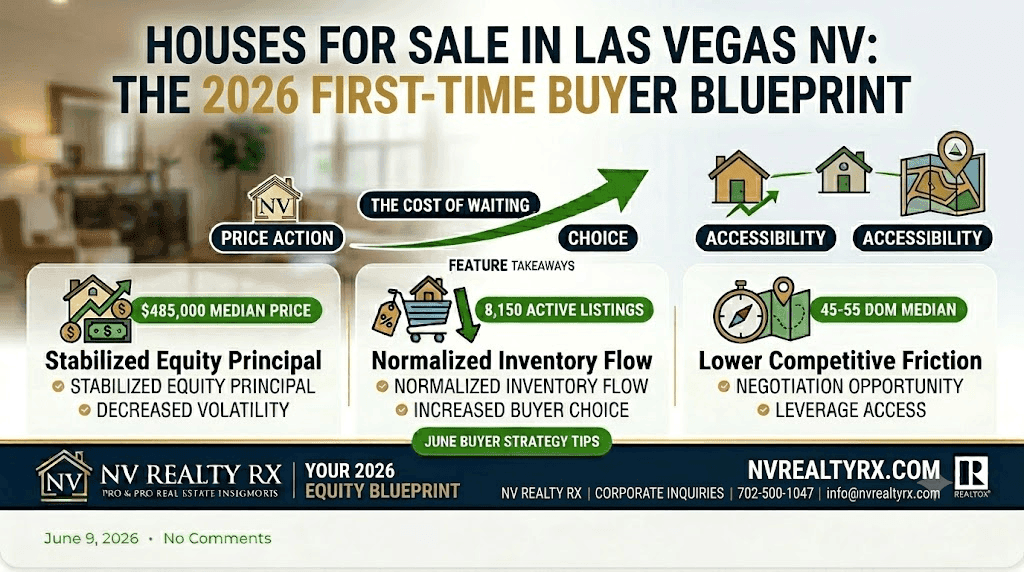
Las Vegas continues to attract buyers from across the country thanks to its favorable tax structure, expanding economy, and relatively accessible housing compared to coastal markets. As of 2026, the market has stabilized, giving buyers more negotiating flexibility and time to evaluate their options.
Today’s buyers are looking beyond just the purchase price. A smart move in 2026 means understanding the full monthly cost of ownership and planning with clarity from the start. Consequently, this guide breaks down those real costs in a practical, transparent way so you can move forward with confidence.
1. Nevada’s Tax Advantage: Why Buyers Continue to Relocate
Nevada remains one of the most tax-efficient states for homeowners.
No State Income Tax Residents keep more of their earnings compared to high-tax states like California and New York. You can verify the latest rates via the Nevada Department of Taxation.
Property Tax Abatement For primary residences, annual property tax increases are generally capped at around 3 percent, helping create long-term predictability. Furthermore, for non-owner-occupied properties, the cap can be higher, reaching up to 8 percent.
Taxable Value vs. Market Value Property taxes are calculated based on a taxable value formula involving replacement cost minus depreciation plus land value, not the current market price. This often results in a lower effective tax rate compared to many other states.
2. Monthly Living Costs: Utilities and Transportation
Utilities in a Desert Climate Utility costs in Las Vegas are influenced by seasonal temperatures, especially during summer.
- Electricity: Air conditioning is typically the largest expense. A realistic range for most single-family homes is between 120 and 350 dollars per month, according to NV Energy.
- Water, Sewer, and Trash: Combined costs generally range from 120 to 180 dollars per month for a standard household, as reported by the Las Vegas Valley Water District.
Energy Efficiency Matters Additionally, homes built after 2020 under updated energy codes can be noticeably more efficient, often reducing cooling costs compared to older homes.
Transportation and Vehicle Costs Nevada applies a Governmental Services Tax based on vehicle value. While newer vehicles typically have higher initial registration, the cost gradually decreases over time. Meanwhile, ongoing infrastructure improvements such as I-15 upgrades and the Brightline West rail project are shaping commuting patterns and future growth corridors.
3. HOA Fees: A Key Part of Monthly Budgeting
Many Las Vegas communities include Homeowners Association fees, especially in newer developments. Typical monthly HOA ranges include:
- Non-Gated Communities: 25 to 90 dollars
- Gated Communities: 80 to 200 dollars
- Master-Planned Communities: 150 to 450 dollars or more
Some neighborhoods include both a Master HOA and a Sub-Association fee, so always confirm the total combined monthly amount when evaluating a property.
4. SIDs and LIDs: Important but Manageable Costs
Special Improvement Districts and Local Improvement Districts are common in newer communities. These cover infrastructure such as roads, utilities, sidewalks, and street lighting. They are included within your property tax bill as a separate line item, often paid semi-annually.
Many homes fall within a 40 to 100$ monthly equivalent, depending on the remaining balance. Buyers can often negotiate whether the seller contributes toward or pays off the remaining balance at closing.
5. A Realistic Monthly Cost Example (2026)
To put everything together, here is a balanced scenario for a 500,000$ home:
- Mortgage: 2,400 to 2,600 dollars per month (based on 6 to 6.5 percent rate with 20 percent down)
- Property Taxes: 250 to 320 dollars per month
- Home Insurance: 100 to 150 dollars per month
- HOA Fees: 100 to 200 dollars per month
- Utilities: 250 to 400 dollars per month (seasonal average)
- SID or LID: 40 to 100 dollars per month
Estimated Total Monthly Cost: 3,140 to 3,770 dollars per month
6. One Cost Smart Buyers Plan For
A well-prepared homeowner also accounts for general upkeep. A good guideline is to budget approximately 1 to 2 percent of the home value annually. For a 500,000$ home, that is 5,000 to 10,000 $ per year, or 400 to 800 dollars per month. While this is not always spent monthly, it is important for long-term planning.
7. Summerlin vs. Henderson: Cost Differences That Matter
Summerlin (West Valley)
Summerlin features higher home prices overall and layered HOA structures are common. However, the slightly cooler elevation may reduce air conditioning usage, and there is strong long-term resale demand.
Henderson (South Valley)
Henderson often offers strong value relative to price. It features newer communities with modern infrastructure and is consistently ranked among safer cities in the country, making it popular with families and retirees.
Work With a Local Expert Who Understands the Full Picture
Buying a home in Las Vegas is about more than just the mortgage. From HOA structures and utility expectations to SID/LID obligations, I provide the clarity you need to make a confident, well-informed decision.
Ready to see the real numbers?
Email Towanda